Skip to main
University-wide Navigation

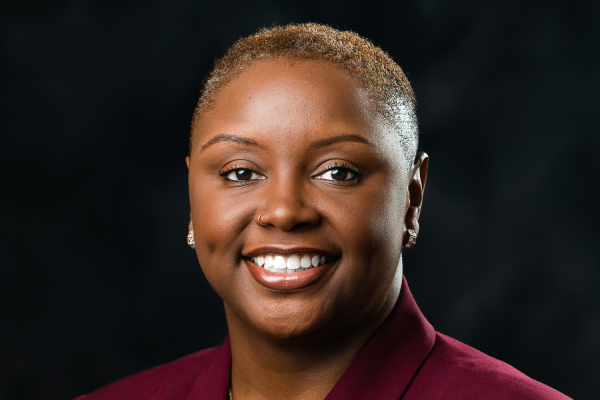
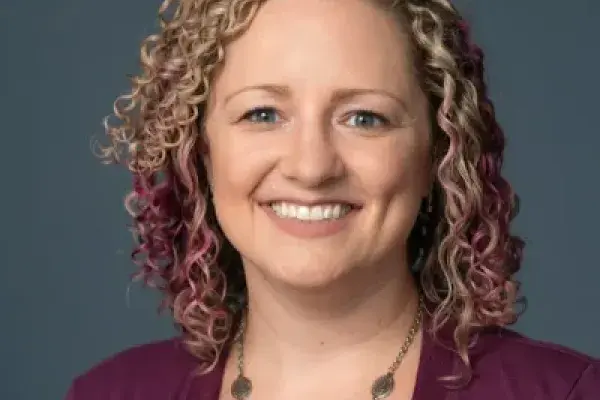
LaShan Hendrix, University of Cincinnati

Abstract: Regulation of Vascular Smooth Muscle Cell Calcification and Opportunities for Therapeutic Targeting

Joe Gauthier, Texas Tech University

Abstract: Extending the reach of density functional theory: capturing charge transfer and making electrons behave

Shudipto Dishari, University of Nebraska

Abstract: Interfaces That Matter: Materials Design for Sustainable Energy and Biomedical Systems

Chris Depcik, University of Kansas

Dr. Christopher Depcik is a Professor of Mechanical engineering at the University of Kansas (KU) with a courtesy appointment in Aerospace Engineering. His research focuses on reacting flow modeling and energy systems, emphasizing reduce dimensional (1-D and 1+1-D) formulations of chemically reacting flows in catalytic reactors, particulate filters, gasification units, desiccant wheels, shock tubes, and pulse detonation engines.

Samantha A. Meenach, University of Rhode Island

Dr. Samantha Meenach is a Professor at the University of Rhode Island (URI), with joint appointments in the Departments of Chemical, Biomolecular, and Materials Engineering and Biomedical and Pharmaceutical Sciences. A first-generation college student from rural Kentucky, she earned her B.S., M.S., and Ph.D. in chemical engineering from the University of Kentucky. Her doctoral research focused on the development of magnetic hydrogel nanocomposites for cancer treatment through hyperthermia and drug delivery.

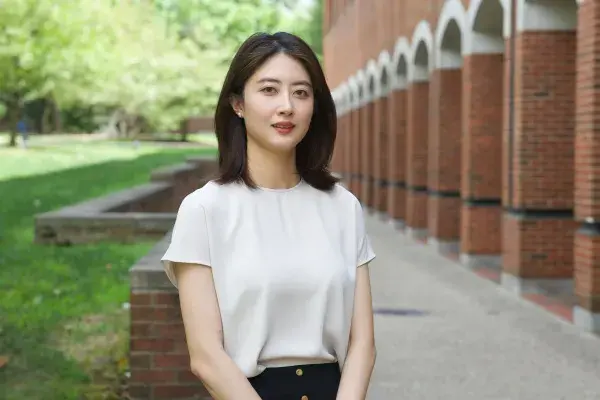
Ni Su, Department of Biomedical Engineering, UKY

Dr. Ni Su is an Assistant Professor in Biomedical Engineering at the University of Kentucky, where she began her appointment in August 2024. She previously completed her postdoctoral training in the Department of Orthopaedic Surgery at Stanford University. Dr. Su's lab engineers biomaterials that actively modulate immune responses to improve tissue repair for skin wounds and critical-sized bone defects. Her team also develops complex in vitro disease models to enable mechanistic studies and higher-throughput therapeutic testing.

Syed Z. Islam, Oak Ridge National Laboratory

Dr. Syed Z. Islam is a Staff Scientist in the Chemical Sciences Division at the U.S Department of Energy's Oak Ridge National Laboratory (ORNL). He joined ORNI in 2018 after completing postdoctoral training at Rensselaer Polytechnic Institute. Dr. Islam earned his Ph.D. in Chemical Engineering from the University of Kentucky (2017), M.S. from North Carolina A&T State University, and B.S. from the Bangladesh University of Engineering and Technology. Dr.

Shengli Jiang, Princeton University

Dr. Shengli Jiang is a postdoctoral associate at Princeton University, working with Professor Michael Webb to integrate simulation and machine learning for polymer design. He received his Ph.D. in Chemical Engineering from the University of Wisconsin-Madison under the supervision of Professor Victor Zavala, focusing on machine learning applications in sensor design, solvent systems, electrochemistry, and sustainability. He earned his B.S. in Chemical Engineering from the University of California, San Diego, where he worked with Professor Zheng Chen on lithium-ion battery cathode design.

Michael Chen

Michael Chen is an independent postdoctoral fellow in the Simons Center for Computational Physical Chemistry at New York University. He received his Bachelor’s degrees in chemistry and computer science from UC Berkeley before going on to conduct his PhD in chemistry at Stanford University where he was a fellow in the Center for Molecular Analysis and Design and received the Centennial Teaching Assistant Award.

Dr. Haoming Ma

Dr. Haoming Ma is a Staff Research Scientist at the University of Wyoming’s School of Energy Resources and Hydrogen Energy Research Center, where he is involved in multiple DOE-funded projects on carbon management, hydrogen production, and energy system analysis. Prior to that, he was a Postdoctoral Fellow at the University of Texas at Austin.